

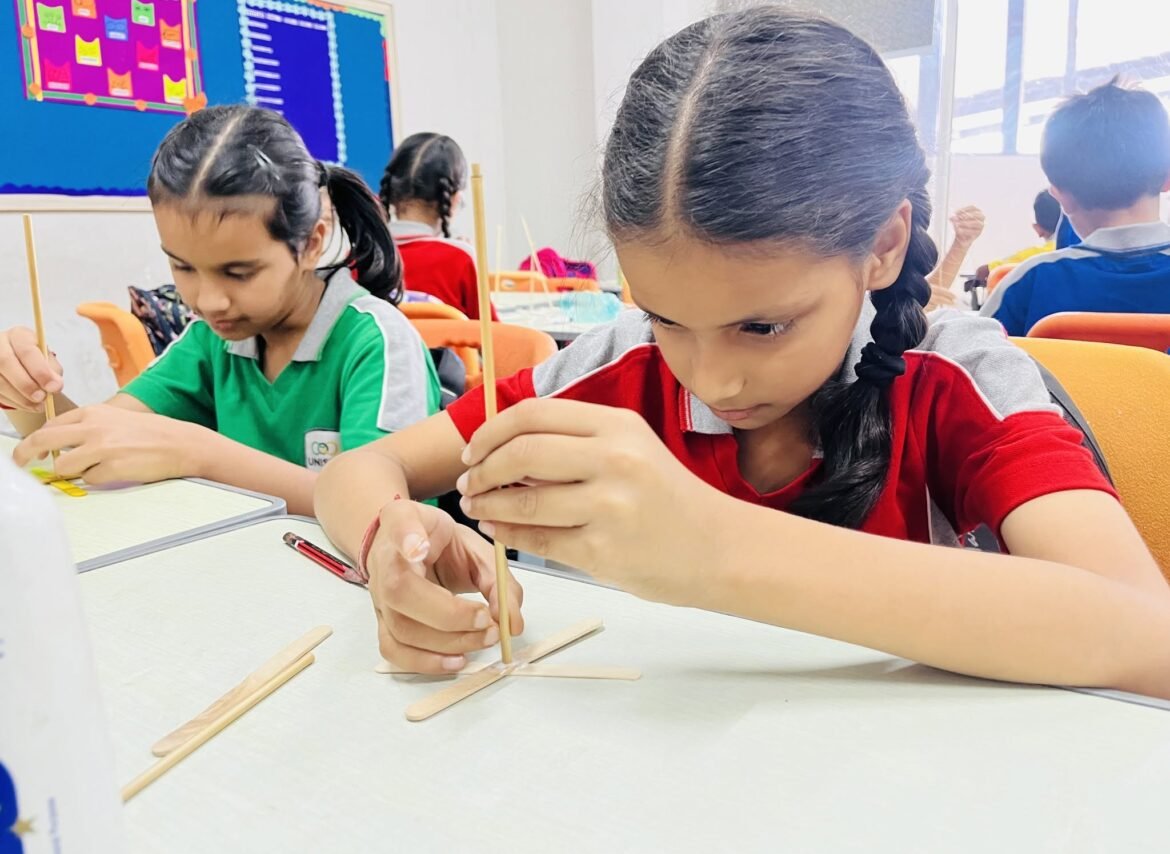
Education becomes truly meaningful when knowledge is not limited to books but connected with real-life experiences. Experiential learning plays an important role in helping learners understand concepts more clearly by applying them in practical situations. It bridges the gap between theory and practice, making learning more engaging and effective. At Unison International School Pinjore, recognized as one of the Top Five Schools in Pinjore, experiential learning is an important part of the academic approach that supports holistic understanding and skill development.
Understanding Experiential Learning
Experiential learning refers to the process of learning through direct experience, observation, and participation. Instead of only reading or listening, learners actively engage in activities such as experiments, projects, discussions, and real-world tasks. This method helps in better understanding of concepts and improves retention of knowledge.
Connecting Theory with Practice
One of the biggest strengths of experiential learning is that it connects classroom theory with practical application. When learners apply what they study in real situations, they gain deeper clarity and confidence. This approach makes education more meaningful and helps in developing problem-solving abilities and analytical thinking.
Enhancing Engagement in Learning
Experiential learning increases interest and engagement in the learning process. Interactive activities, group tasks, and hands-on experiences encourage active participation. Counted among one of the Top Schools in Pinjore, we aim to promote experiential learning and create an environment where learners stay motivated and involved in their academic journey.
Developing Practical Skills
Through experiential learning, learners develop important life skills such as communication, teamwork, decision-making, and adaptability. These skills are essential for future success and help in facing real-world challenges effectively. Practical exposure also encourages creativity and independent thinking.
Role of Educators in Experiential Learning
Educators play a key role in designing and guiding experiential learning activities. They create opportunities for exploration, encourage curiosity, and support learners in connecting theory with practice. Their guidance ensures that learning becomes more interactive, meaningful, and result-oriented.
Final Words
The impact of experiential learning is significant in modern education as it transforms traditional learning into a more practical and engaging experience. By connecting theory with practice, it helps learners understand concepts deeply and apply them effectively in real life. Schools that adopt this approach prepare learners for future challenges with confidence and strong practical knowledge.